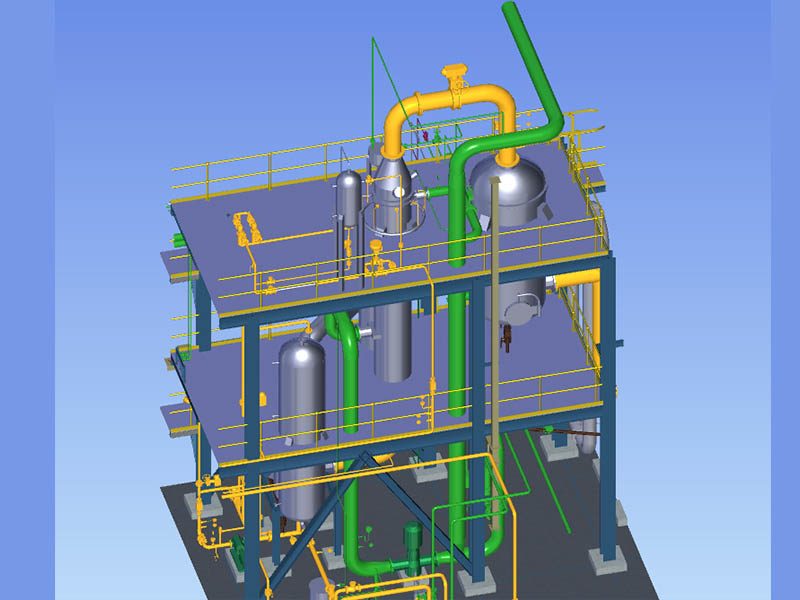
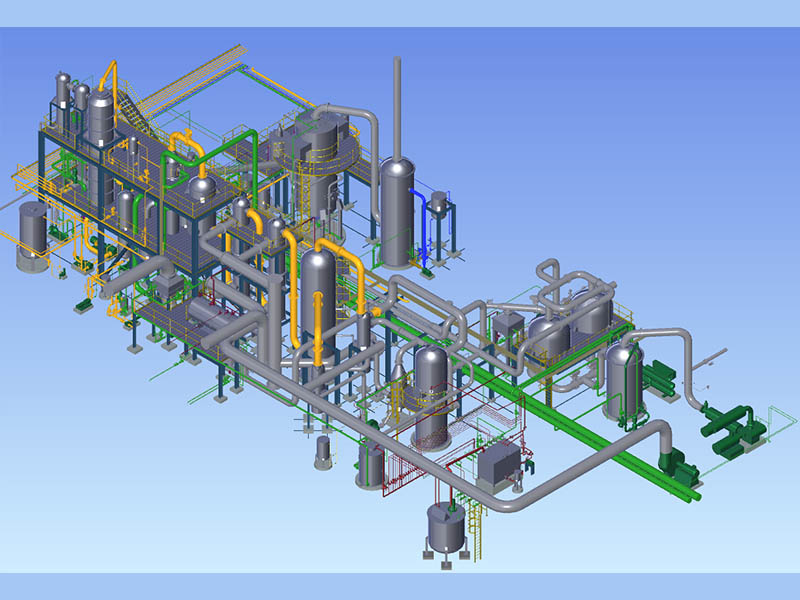
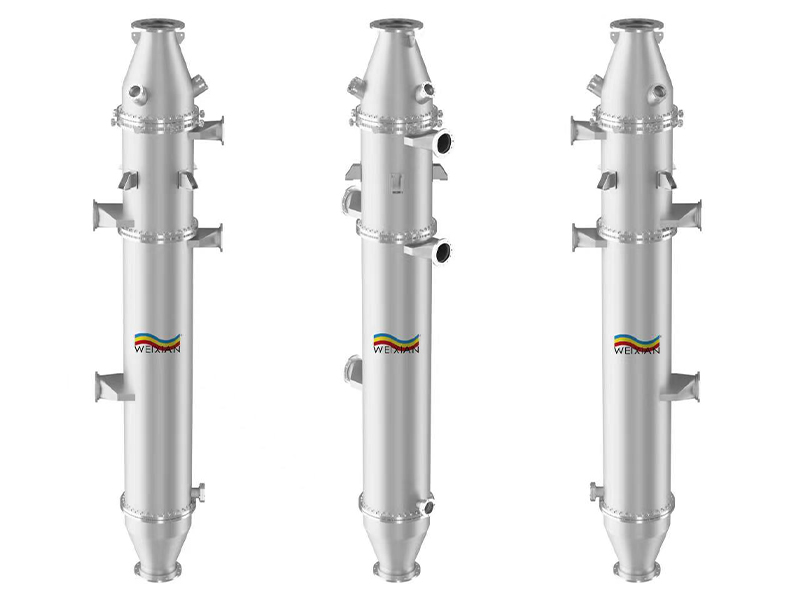
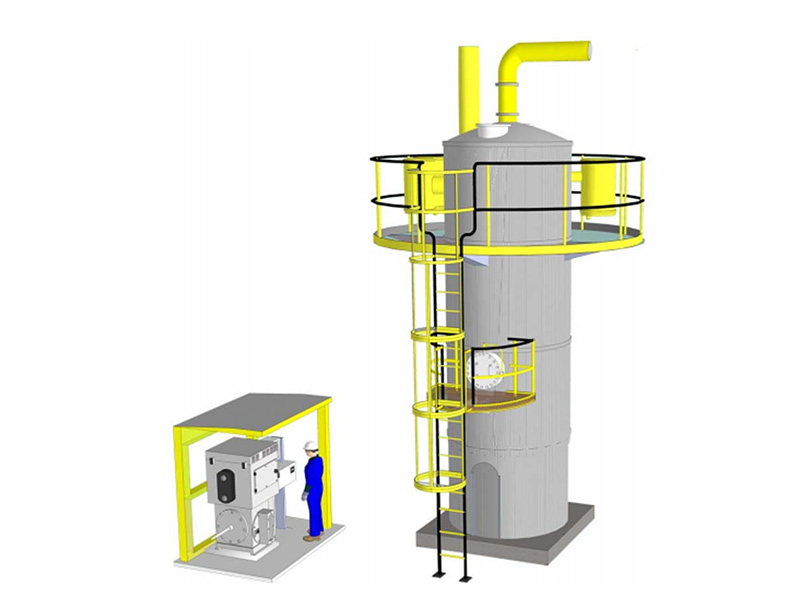
SO₃ gas, adjusted to a precise concentration (%), passes through an SO₃ filter and then reacts with the organic raw material in the reactor. The heat of reaction is removed by circulating cooling water on the shell side of the reactor. The exhaust gas passes through a gas–liquid separator and a cyclone separator before entering the exhaust-gas treatment unit, while the organic acid is sent to an aging and stabilization unit, or to a neutralization and dioxane-stripping unit.
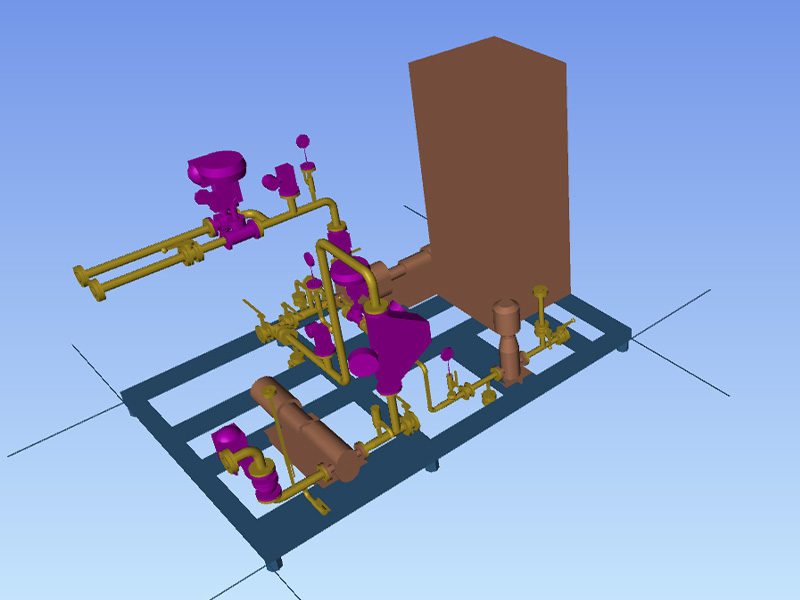
The flow rate of the organic raw material is controlled by a mass flow meter and a control valve (or by the VFD of a gear pump). The liquid level in the gas–liquid separator is controlled by a level transmitter and the VFD of the discharge pump. The flow rate and density of the organic acid are measured by a mass flow meter, with density under cascade control to trim the raw-material flow rate. The inlet temperature of the circulating cooling water is held constant by makeup water, and the cooling-water flow is regulated by a control valve whose opening depends on the reactor temperature difference on each pass.
Features: WEIXIAN incorporates more than three key design improvements to enhance reactor reliability. The dimensions of every reactor tube, distributor and nozzle are manufactured to a high degree of uniformity. Each reactor tube is produced by high-precision rolling followed by an oxygen-free annealing process, so that the surface finish is uniform across all tubes and along the length of each tube. Compared with competing technologies, WEIXIAN plants deliver longer continuous operating runs and lower dioxane levels when producing SLES.
WEIXIAN is an engineering company specialized in supplying turnkey sulphonation/sulphation plant and it's technology, focusing on the R&D of LABSA, SLES, SLS, AOS, HABSA, MES and other anionic surfactant production technologies.