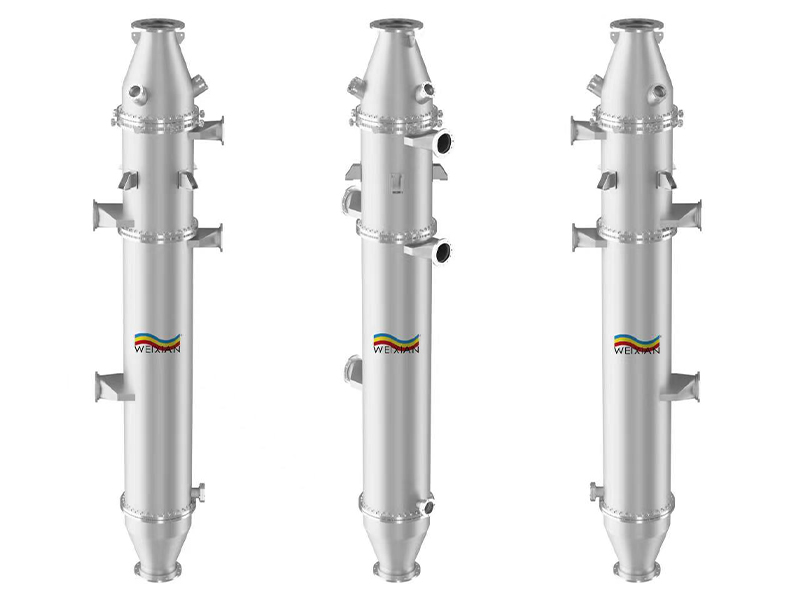
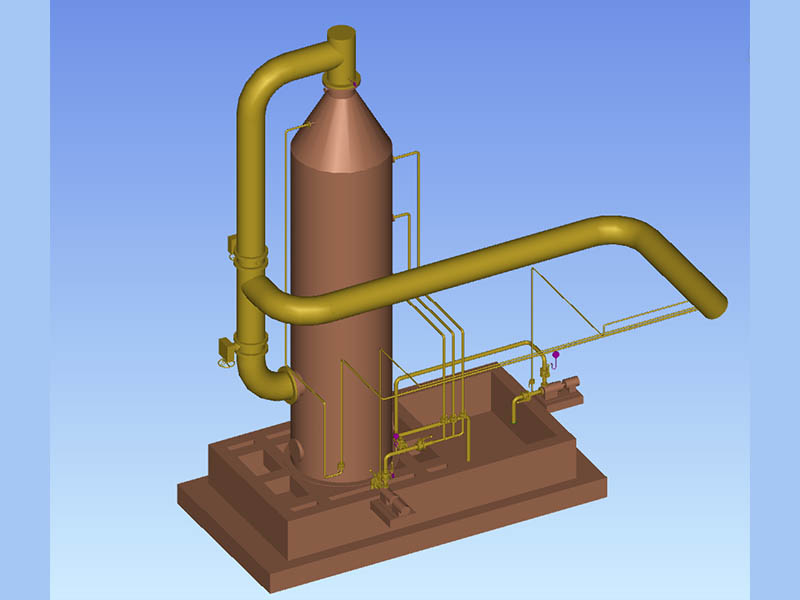
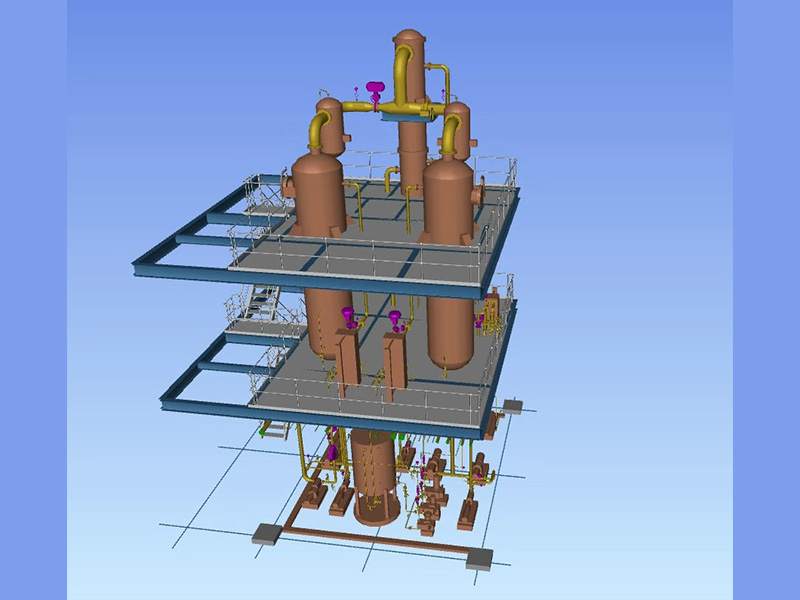
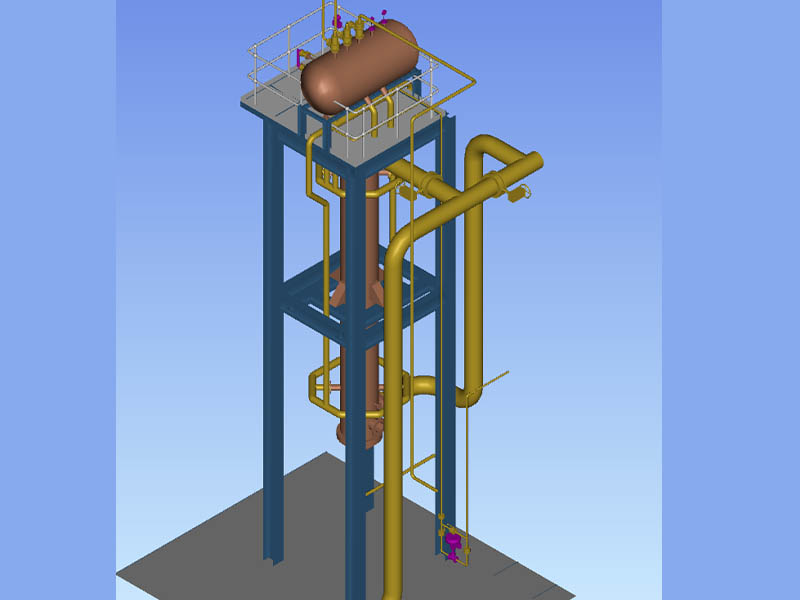
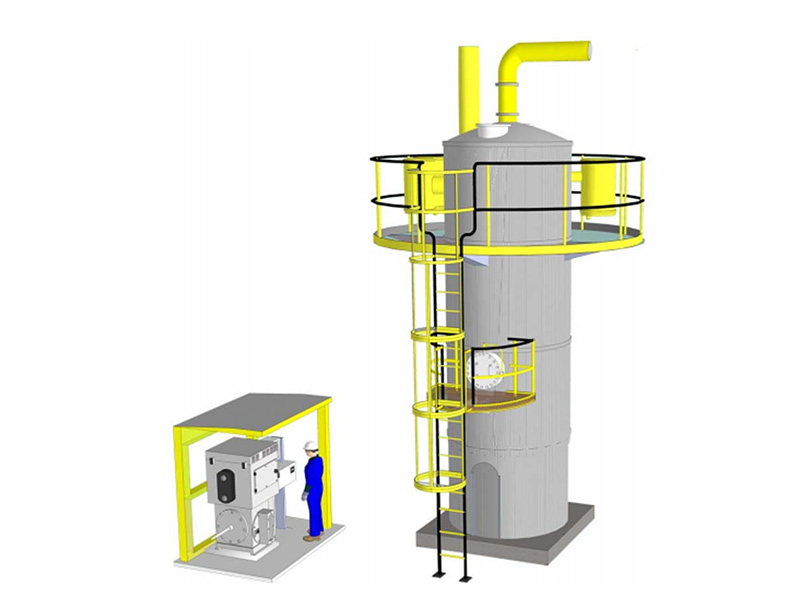
WEIXIAN adopts multi-tube falling film reactor. Its capacity ranges from single-tube configuration up to a 240-tube unit (10 t/h). Since 1995, WEIXIAN has delivered hundreds of reactors, among which more than 40 units feature a capacity exceeding 5 t/h. By 2026, WEIXIAN had successfully commissioned six set of 7.5 or 8t/h reactors.
1. Organic feed distribution system at reactor head
After calibration, flow deviation is controlled within ±1.5%. The distribution header and nozzles are machined and formed in a single clamping setup via CNC machining. Critical dimensional tolerances are guaranteed at ±0.005 mm, with secondary dimensions held to ±0.01 mm.
2. Surface finish of reaction tube inner bore
Reaction tubes are manufactured by high-precision cold rolling followed by annealing, and treated under vacuum at 1040 °C to eliminate intermolecular residual stress. These processes yield an internal and external surface finish of Ra 0.4 (mirror-like) for each tube; the inner and outer diameter deviation of reaction tubes is limited to less than ±0.02 mm.
3. Welding and non-destructive inspection for distribution header and reaction tubes
The joint between distribution header and reaction tube employs high-frequency welding combined with GTAW (gas tungsten arc welding, argon arc welding), with fillet weld geometry. Non-destructive testing (NDT) is adopted for flaw detection. Every individual tube undergoes a 0.6 MPa hydrostatic pressure test and endoscopic inspection to verify weld integrity and internal tube dimensional accuracy.
4. Concentricity of the three tube sheets
All three tube sheets are machined on a machining center using a unified coordinate system. Tube concentricity tolerance is ±0.01 mm. The three tube sheets are stacked and secured in their assembly orientation, then every hole is checked one by one using an inspection mandrel to confirm concentricity deviation ≤ ±0.01 mm.
5. Sealing reliability
5.1 Cooling water seal between upper shell section and middle/lower shell sections
Cooling water flows into the second and third shell sections and discharges from the third section of the sulfonator. The first (upper) section is strictly isolated to maintain a separate circulation of 15 °C chilled water. This is critical to superior product quality, particularly for AOS production.
5.2 Bidirectional sealing for SO₃ and organic feed at the sulfonator upper section
On the first tube sheet, the compression screw assembly uses a composite screw head plus triple combined gaskets to form robust bidirectional sealing. It achieves complete isolation from oleum and prevents corrosion and leakage.
5.3 Cooling water sealing between distribution header and shell side
An innovative sealing structure significantly improves shell-side pressure resistance. The shell-side test pressure exceeds 0.6 MPa, permitting pressurized water return. All sealing elements are special fluororubber O-rings, delivering 100% sealing performance with lifetime maintenance-free operation.
5.4 Cooling water sealing at the lower reaction tube and shell side
Fluororubber O-rings are implemented here, providing 100% sealing performance and lifetime maintenance-free operation.
6. Additional technical advantages of WEIXIAN sulfonator
6.1 Extended operating campaign: Continuous LABSA production campaign ≥40 days
6.2 Continuous production campaign for 70% SLES exceeds 3 months
6.3 Continuous production campaign for AOS ≥25 days
6.4 Convenient sulfonator calibration Flow deviation at initial start-up can be controlled within ±1.5%. Replacement gaskets are available in thicknesses of 1.8–2.2 mm (standard thickness: 2 mm). This ensures premium product quality and extends sulfonator cleaning intervals.
6.5 Production turndown flexibility
LABSA capacity adjustment range: 55%–115%
70% SLES capacity adjustment range: 80%–140%
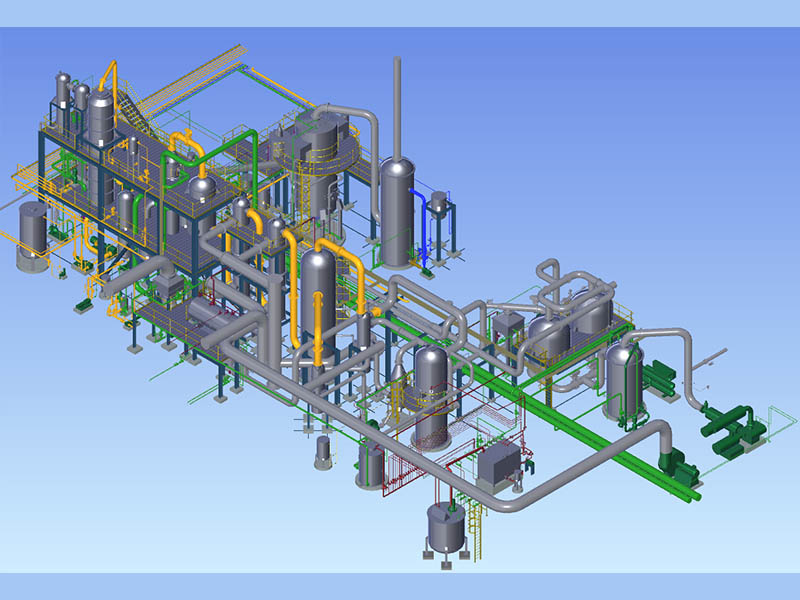
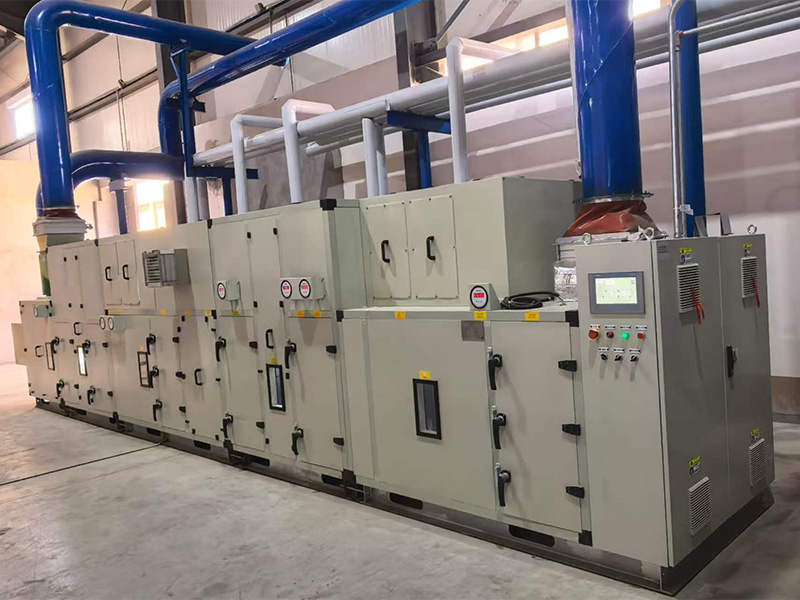
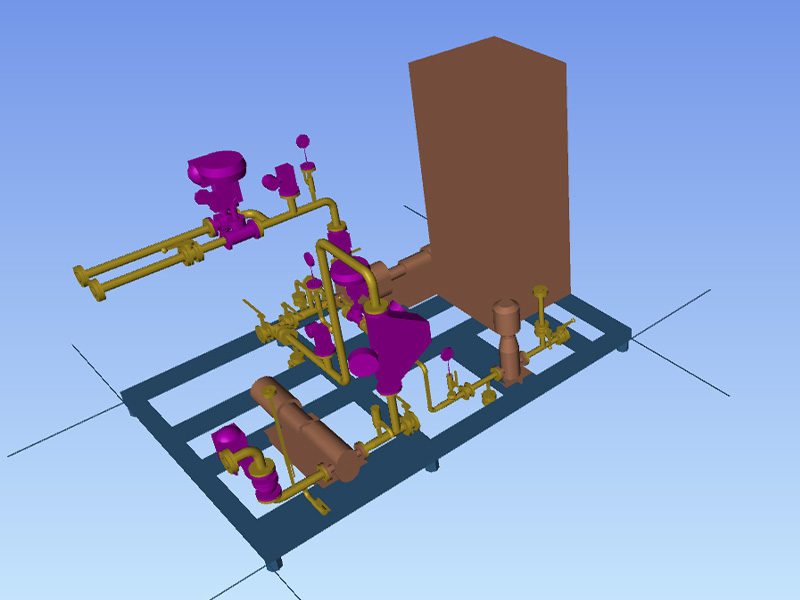
WEIXIAN is an engineering company specialized in supplying turnkey sulphonation/sulphation plant and it's technology, focusing on the R&D of LABSA, SLES, SLS, AOS, HABSA, MES and other anionic surfactant production technologies.